


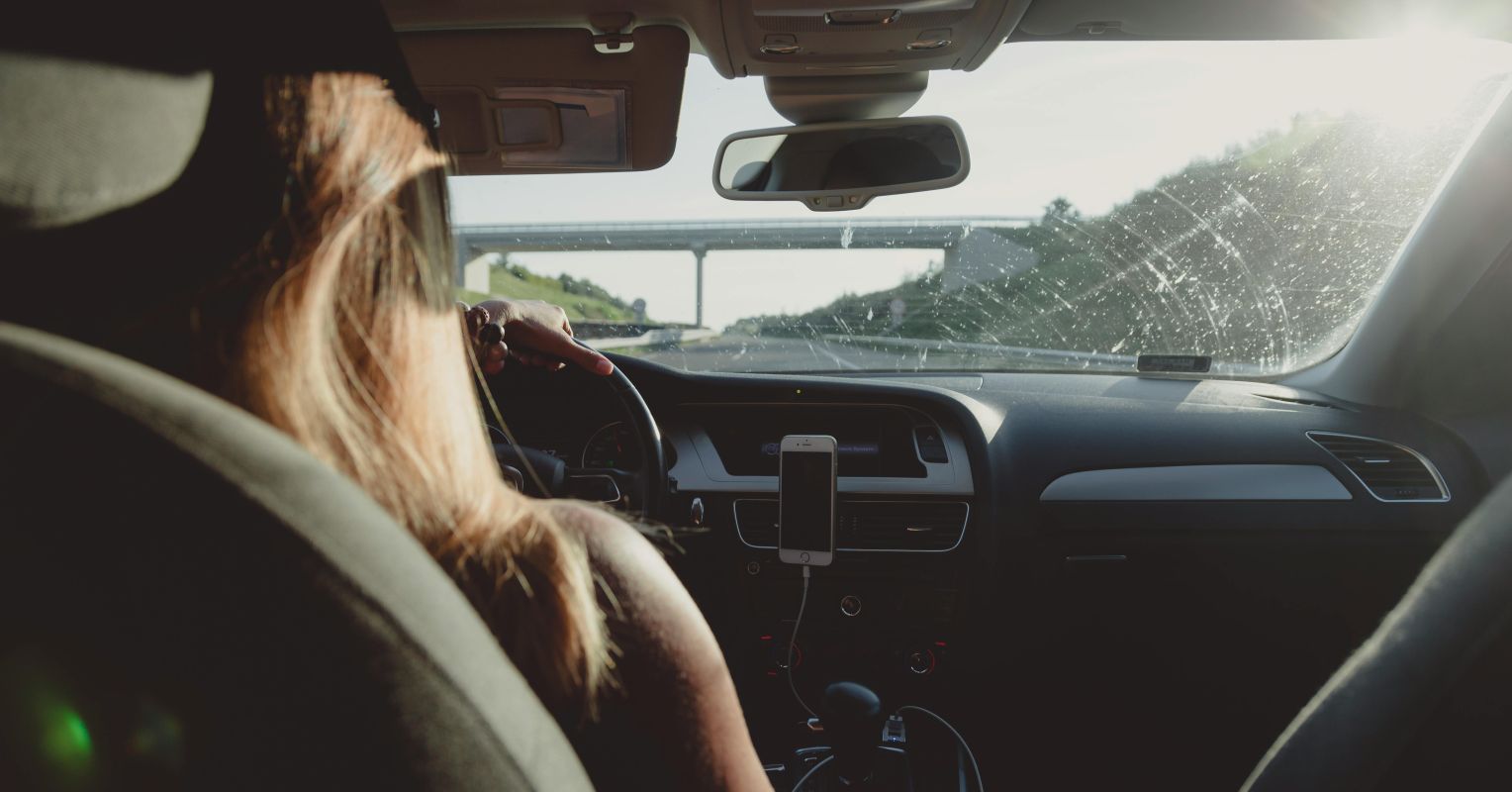
Stalking can cause insomnia, anxiety, depression, and social isolation. Stalking is a top 10 risk factor for intimate partner homicide, increasing the risk of homicide threefold as compared to domestic abusers who don’t stalk their victims (Spencer and colleagues, 2018). Some domestic abusers monitor their victims through their cars. New technologies, same fear-inducing results (Rogers and colleagues, 2022).
We expect privacy in our cars. However, new technology enables domestic abusers to track and record their victims. In many states, such tracking is considered illegal stalking, cyberstalking, or electronic surveillance. But abusers are doing it, anyway. Monitoring a partner (or ex-partner) through their car often forms part of a coercive control strategy that also includes intimidation and financial, verbal, physical, sexual, and litigation abuse.
Recording Around the Car
Some newer model cars have factory-installed cameras with monitoring and recording options in 360 degrees around the car. These work even when the car is off. The recordings may be stored automatically on a USB drive or monitored in real time from a distance. Such recording capability can be installed in cars after purchase, turning any vehicle into a powerful spying system.
Years after their divorce, Carrie still had a full restraining order prohibiting her teenage sons’ father from contacting her in any way. One day, her son drove home in his dad’s brand-new Tesla, saying that his father insisted that he park it in Carrie’s driveway, right by her door. Suspicious, Carrie discovered on the Internet that the Tesla has a Sentry feature enabling it to record action anywhere around the car. Her ex-husband was using the car itself to monitor her home.
Location Tracking Devices
Abusers use small tracking devices, such as AirTags, to find and track their victims. Seventeen states ban the use of tracking devices without the consent of the person being tracked. Another nine states specifically ban their use in motor vehicles.
When Latoya and her boyfriend broke up, she discovered that he had sewn AirTags into her purse, backpack, jackets, and lunch bag and had hidden one in her car. This stalking behavior started during their relationship. “He kept showing up at places I didn’t expect him to be. If I left work and decided to go to the store at the last minute, he’d suddenly be there. He set up the AirTags to link my location to his phone, not mine. I got a confidential address after we separated, and he instantly knew where I was.”
GPS Monitoring Through Car-Specific Systems
Global positioning systems (GPS) are a network of satellites that provide location information. GPS is linked to common devices such as laptops, smartphones, and car navigation systems. GPS provides convenient directions on how to drive to a new place. However, GPS also provides opportunities for abusers to monitor their victims. An abuser who has had access to a phone or phone plan can track a person’s location through their phone. An abuser who is or was involved with the purchase, care, or maintenance of a car may be linked to the car’s navigation system. Some abusers simply call car dealers, asking to be allowed to track the car. The dealer may grant this access, no questions asked.
Car-Tracking with a Fatal Outcome
Attorney Nick Brand represents the families of two young people, Sara Beck, 22, and Mikey Williamson, 20. They were killed in 2022 by Beck’s ex-boyfriend, who apparently tracked her through a hidden device that revealed the location of her car in real time. The ex-boyfriend had never been reported as violent before, but he couldn’t accept that Beck had moved on and was thriving without him. He allegedly tracked her car across state lines to a friend’s home before killing her, her friend, and himself. The families of both victims are suing the device’s manufacturer. The legal complaint states that the device is “negligently, recklessly, and intentionally designed to covertly track unsuspecting individuals.” The complaint notes that the device is waterproof, smaller than a cell phone, and is “designed to track nonconsenting and unsuspecting people while being affixed covertly to their vehicles.”
Voice Recorders in Cars
For the price of a movie and popcorn, a person can buy a voice-activated mini-tracker that will record a conversation inside the car as well as its location. Some of these are the size of a thumbnail and can be accessed from a distance. Some can be charged from the car’s electronics. (These devices can be used in places other than cars, too.) Cars may seem ideal for recording conversations because people tend to speak freely on their phones and to each other when they are in a car. It’s illegal in many states to record a person without their knowledge, especially in a place where privacy is assumed, such as a car.
What Can a Person Do?
The following steps can help people who believe their partner or ex-partner is monitoring them through their car:
Contact their local domestic violence agency to set up a safety plan and request advice around protective orders.
Scan their surroundings for cameras and listening devices. This (rather macho) video demonstrates how to scan a car for hidden devices. This article also provides information for inspecting homes and vehicles. Free apps can detect spying devices that use wi-fi. However, most vehicle spying devices don’t use wi-fi. They may have their own storage or use satellites instead. And some devices advertise ways to evade detection, such as the Q&A section for this device.
Contact the car dealership. The dealer should be able to say who has access to a car’s navigation system. If the domestic abuser is on the car payment plan, or is listed as owner or co-owner, it might be safest for the victim to disable the navigation system altogether. The same is true for factory-installed cameras.
Call 911. If the person feels in danger, the police may be willing to inspect the vehicle for spying devices. This is especially important if the abuser has access to a gun or has made suicidal threats or threats to harm another person. If evidence of threats, injuries, or domestic violence exists, this may motivate police into action.
Keep a log of all stalking incidents. Record dates, times, and events. While one or two “chance” encounters may seem like a coincidence, repeated encounters may suggest the person is being tracked.
File for an order of protection. Localities vary in how hard or easy it is to obtain one, and local police vary in how much they enforce them. The local domestic violence agency should be able to provide advice and help.
Some abusers do pose a continuing high risk to their victims, especially in the 18 months after a separation. Mental health professionals need to understand that stalking and monitoring are common. They are a signal of true risk and not a sign of paranoia in a domestic violence victim.